
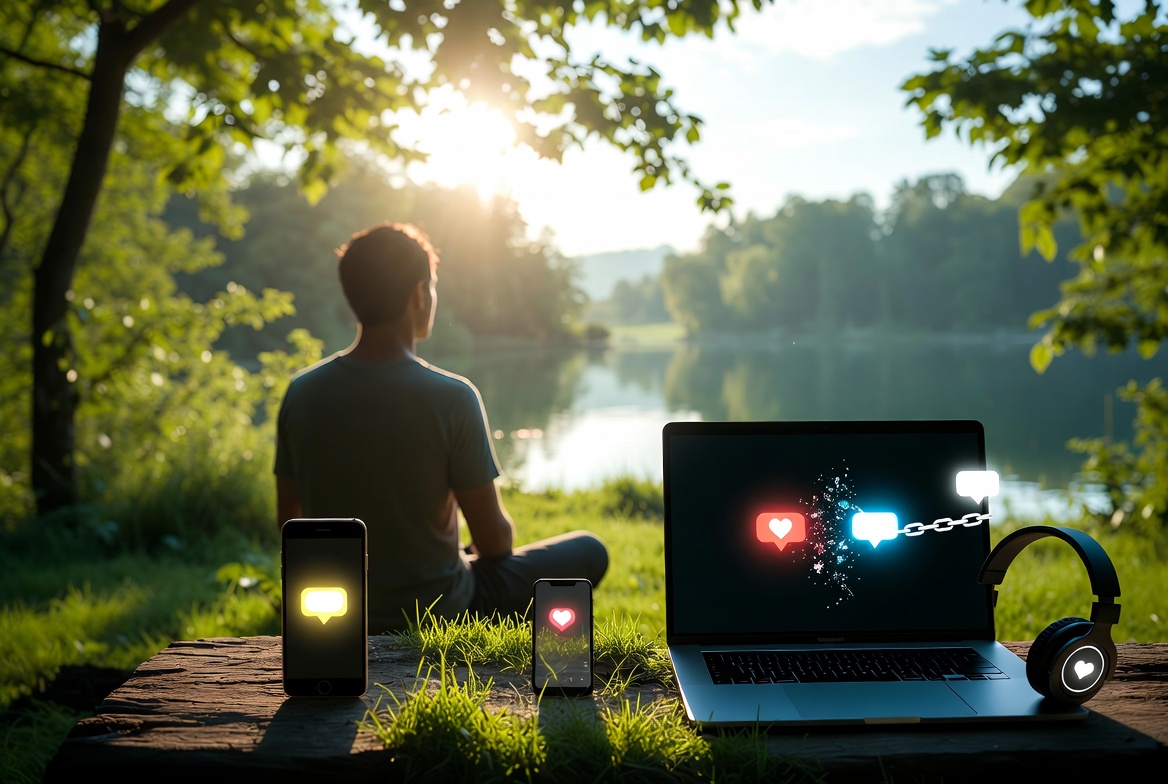
Digital Detox Guide: Reclaim Your Focus and Recharge Your Mind
Digital Detox Guide: Reclaim Your Focus and Recharge Your Mind
You know that feeling—your head’s buzzing, you’re wiped out, and your attention’s shot. Honestly, half the time it isn’t because your schedule’s packed…it’s because your brain never gets a break from screens. Most folks roll out of bed and grab their phone instantly, diving into an avalanche of notifications. Emails, headlines, memes, texts, videos—it’s all coming at you before you’ve even fully woken up. No wonder mornings feel so draining.
Screens are everywhere: you can’t avoid them. Work, shopping, messaging, binge-watching, school. Sure, tech makes things easier, but too much slowly chips away at your focus, sleep, relationships, and mental clarity. It’s not just a nuisance—it actually messes with how well you function.
So, people are trying to pull back. They want some balance, and that’s where the “digital detox” comes in.
Don’t worry, it’s not about trashing your gadgets or living off the grid. You just start using your screens on your own terms. You control them—they stop controlling you.
This guide makes digital detox practical. Real strategies for cutting screen time, regaining focus, and improving your well-being—all without becoming a hermit.
Let’s get started.
What Is a Digital Detox?
Imagine just setting your devices down for a while. That’s a digital detox. Not about total tech exile, just less time spent glued to your phone, scrolling social feeds, streaming, gaming, answering emails. You’re setting boundaries, not cutting yourself off.
Why Should You Try It?
Honestly? Apps are built to grab you. They’ll pull you in, keep you scrolling, ping you with notifications, personalize everything so you can’t look away. It’s addictive.
Too much, and you end up fried. Tired, anxious, scattered, sleeping poorly, comparing yourself to strangers online, procrastinating real tasks. Your attention span shrinks. You get stressed and overwhelmed.
Easing back on screens lets your brain cool off and gives you space to think.
How Do You Know If You Need a Detox?
Sometimes you don’t notice how much devices drain you. If this sounds familiar, it’s a sign:
- You check your phone nonstop—even when nothing’s there.
- Focus is a struggle.
- You get agitated if your phone’s not nearby.
- Your sleep’s a wreck—up late scrolling.
- Scrolling social feeds makes you anxious.
- You procrastinate life stuff.
- You feel mentally wiped out.
- You’re always distracted.
That’s your cue.
What’s In It For You?
When you take breaks—big or small—you may notice:
- You’re finally able to focus.
- Your sleep gets better.
- You feel calmer instead of frazzled.
- Suddenly you get more done.
- Relationships feel richer without screens in the way.
- Moods lift.
- Your mind feels clearer.
- Life evens out.
Just a few tweaks can make a huge difference.
Start Small
Don’t overhaul everything overnight. That almost never sticks. Just cut back a bit—maybe less YouTube, fewer scrolls. Start by tracking your screen time so you know what needs changing.
Silence the Distractions
Notifications are relentless. Turn off what isn’t useful—shop alerts, social pings, game updates, all that noise. Keep only what’s critical. You’ll find it much easier to concentrate.
Set “No Phone” Zones
Pick a few places at home where devices are off: bedroom, dinner table, bathroom, or your workspace. You’ll connect more—with people and the world around you.
Power Down Before Bed
Screens late at night mess with sleep. Blue light confuses your internal clock. Swap scrolling for reading, stretching, or some music. Aim for half an hour (or more) screen-free before bed.
Schedule Social Media
“Just popping in” always turns into an hour lost. Set real windows for checking social apps—maybe 20 minutes morning and evening. Stick to a routine and avoid the endless scroll.
Replace Screens With Real-Life Stuff
You need swaps, not just cuts. Reach for a book, cook, go outside, exercise, doodle, hang out with friends or family. Offline hobbies clear the mental haze.
Single-Task
Multitasking drains you. Put down your phone when you’re talking, eating, working. Focus fully on one thing at a time—it’s less exhausting and more effective.
Use Tech Helpers
Most devices have screen-time trackers, app limiters, focus modes, blockers, sleep prompts. Use them—they really work.
Take Mini Screen Breaks
Long stretches in front of screens are brutal for your brain and eyes. Every 20 minutes, look away and find something 20 feet away for 20 seconds (the 20-20-20 rule). It refreshes you.
Get Outdoors
Nature resets your mind. Walk, plant something, ride your bike, hit the park—just breathe. Mental fog clears every time.
Talk Face-to-Face
Texting’s fine, but nothing beats a real conversation. Hang out with friends, family, anyone you like. It’ll boost your mood for real.
Try a Screen-Free Day
Once cutting back feels easy, challenge yourself—take a whole day off from optional screens. Read, cook, create, explore, play, reconnect. Notice how clear and refreshed you feel.
What Not to Do
- Don’t try freezing all devices at once—it’s too much.
- Swapping one app for another (Instagram for TikTok)? Not helping.
- Don’t guilt yourself for using tech—you’re aiming for balance, not perfection.
- Notice your triggers—are you bored, stressed, anxious? That’ll help you break the pattern.
Sample Daily Detox Routine
Morning:
- Leave your phone for at least 30 minutes after waking.
- Stretch or journal instead.
Afternoon:
- Schedule short breaks for apps, not endless scrolling.
- Work focused, no interruptions.
Evening:
- Dim your screen’s brightness.
- Put devices away before bed.
- Relax or read.
Simple beats complicated every time. That’s how routines stick.
Quick FAQ
What’s a digital detox?
Cutting back on screen time to help your mind and mood bounce back.
How do you start?
Trim screens gradually, silence notifications, create device-free spots, add more offline time.
What’s the payoff?
Sharper focus, better sleep, less stress, more clarity, higher productivity.
How long does it last?
Could be an hour, weekend, week—whatever feels right.
Does it really help?
Definitely. Lowering screen time cuts stress and clears your head.
One Last Thing
Tech isn’t bad—it connects us, helps us out. But when screens start running your day, you’ve got to take back control.
Sometimes, what you need most is to step away, even briefly. Recharge your mind, catch real rest, hang with people face-to-face. Remember what peaceful feels like—no constant pinging.
In a world where everyone’s shouting for your attention, learning to unplug might be the healthiest habit you ever pick up.