
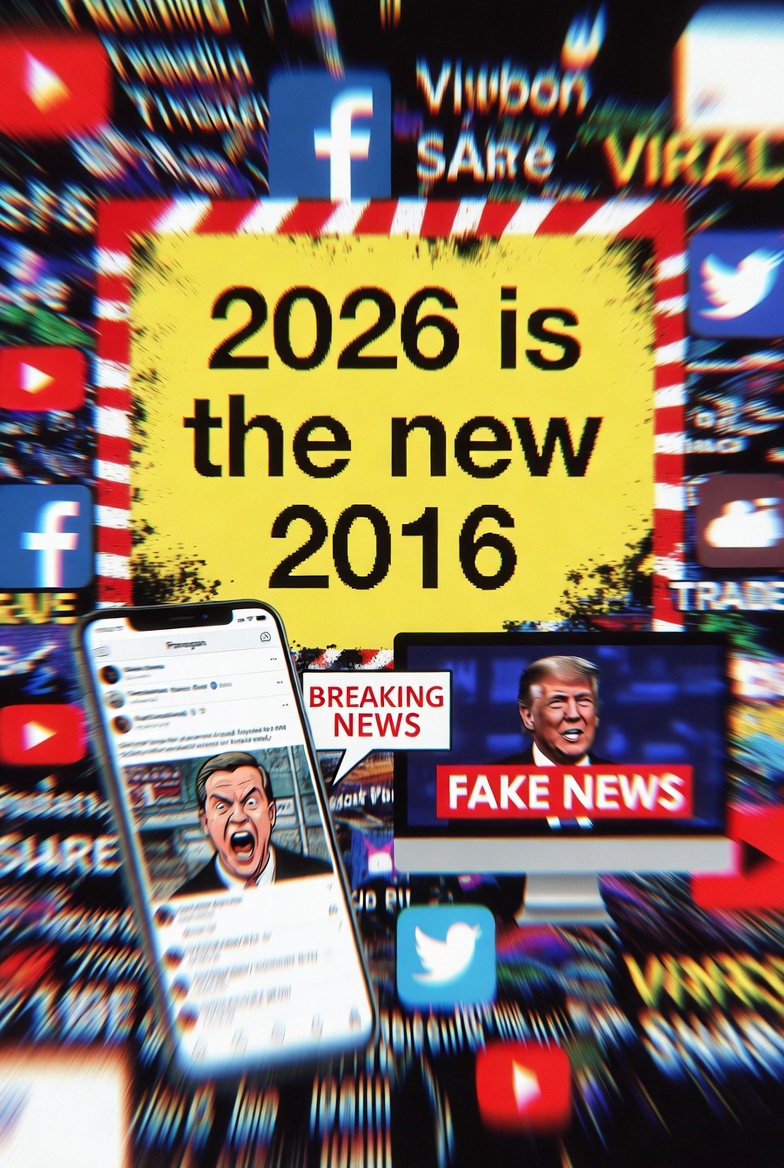
Why “2026 Is the New 2016” Is Blowing Up Online
Why “2026 Is the New 2016” Is Blowing Up Online
Lately, you can’t scroll through X (Twitter), TikTok, Instagram, or Reddit without seeing it: “2026 is the new 2016.” It’s everywhere. People are swapping memes, arguing politics, and just riffing on how the energy online now feels weirdly familiar—almost like we’ve looped back a decade.
So, what’s up with this phrase? Why is everyone suddenly comparing 2026 to 2016, and what does it really mean?
Let’s dig in.
What People Mean by “2026 Is the New 2016”
Nobody’s saying 2026 is literally a copy-paste of 2016. It’s more about the vibe.
When people throw out “2026 is the new 2016,” they’re getting at a few things:
It feels like we’re hitting another big turning point.
Online spaces are wild again—chaotic, meme-obsessed, and really divided.
Politics, tech, pop culture—everything’s shifting fast, just like in 2016.
Basically, people sense that history is rhyming, if not repeating.

Why 2016 Still Haunts the Internet
To get why everyone’s so fixated on this comparison, you’ve got to remember what made 2016 such a standout year.
Why 2016 Hit Different
Political upsets all over the world
Social media exploded (in every sense)
Memes went mainstream
Unpredictability was the rule, not the exception
Cultural divides weren’t just online—they became the story
For a lot of people, 2016 was the year the internet—and honestly, the world—felt like it shifted on its axis.
Why the Phrase Is Catching Fire Again
- Politics Feels Just as Tense
Fast forward to 2026: heated elections, endless debates, everyone side-eying institutions. The internet eats this stuff up, and calling back to 2016 just makes everything feel even more intense.
- Social Media Has Gone Off the Rails (Again)
Platforms feel less polished, more raw. Hot takes fly, memes spread in seconds, emotions run high. Feels almost like the good old days—before brands and algorithms tried to tidy everything up.
- Nostalgia Is Fueling the Fire
People miss 2016. They remember it as more fun, more authentic, less controlled by soulless algorithms. Memes felt handmade. Calling 2026 “the new 2016” is kind of a wish—a hope we can get some of that energy back.
- The Internet Loves Its Cycles
Trends always come back around. Music, fashion, memes—they all recycle. Spotting those echoes gives people a way to make sense of it, and boiling it all down to a six-word meme just works.
- It’s a Perfect Meme
Short, feels true, totally open for interpretation. People can use it seriously, sarcastically, or just to get a laugh. That’s meme gold.
How TikTok and X Made It Viral
On TikTok, you’ll see split-screen videos: “2016 vs. 2026 culture,” edits that scream “it feels like 2016 again,” all backed by throwback songs.
On X, it’s all about one-liners, political jabs, and meme threads that spiral into debates. The phrase itself is the spark that starts a conversation, not the end of one.
Is 2026 Really Like 2016?
There’s overlap, for sure:
Politics are as polarized as ever
The internet shapes the conversation
Memes drive opinions
Everyone’s anxious, but jokes help
But the world’s changed too:
AI runs the show in 2026
Platforms are more controlled by algorithms
People are more skeptical, more aware
Information moves even faster, but trust is lower
So yeah, the mood might match, but the details are totally different.
Final Thoughts
“2026 is the new 2016” blew up because it nails a shared feeling. It’s nostalgic, a little worried, a little funny, and super open-ended—exactly what social media loves.
Whether history repeats itself or not, one thing’s for sure: people sense another big shift coming, and they’re already giving it a name.
FAQs
Why’s “2026 is the new 2016” trending?
Because people see the same social, political, and cultural tension—and the phrase sums it up in a way you can meme.
Is it actually true?
Emotionally, yeah, for a lot of folks. But the details? Totally different, thanks to AI, tighter platform control, and a world that’s way more self-aware.
Who kicked this off?
Nobody in particular. It just bubbled up across TikTok and X through memes and comments.
Is this phrase political?
Sometimes, but not always. Some people use it to talk politics. Others just want to joke, reminisce, or poke fun at how weird things feel.
Will it stick around?
Like most viral memes, it’ll fade eventually. But the feelings behind it? Those are probably here to stay.