
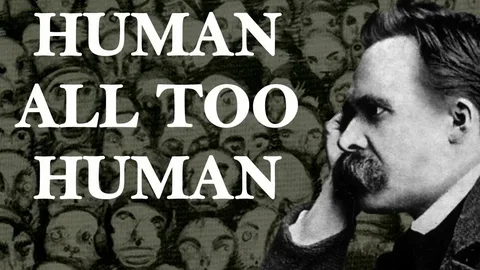
nietzsche human all too human summary
Nietzsche’s Human, All Too Human hit the shelves in 1878, and right away you can sense a shift. He drops the mystical tone from his early days and gets a lot more skeptical, digging into things with a sharp, psychological, almost historical lens. The book’s full of quick, biting aphorisms—each one poking holes in the big ideas we tend to take for granted: morality, religion, philosophy. He keeps asking, “Do these things really hold up?” What he finds is pretty blunt: people are just people—flawed, complicated, messy, and full of contradictions. nietzsche human all too human summary
Structure and Main Sections
- Nietzsche cuts the book into nine major sections, each circling a different slice of human experience. Here are some standouts:
- “Of First and Last Things” wrestles with what we think we know—about reality, language, knowledge, the whole deal.
- “On the History of Moral Feelings” digs into where our ideas of good and evil actually come from.
- “Religious Life” takes on religious belief headfirst, especially this whole idea that you should deny yourself for some higher goal.
- “From the Soul of Artists and Writers” is Nietzsche riffing on art, creativity, and the whole idea of genius.
- “Signs of Higher and Lower Culture” explores why some cultures rise while others fall, and what it means to truly think for yourself.
- After that, he dives into sections like “Man in Society,” “Woman and Child,” “A Look at the State,” and “Man Alone With Himself.” These are packed with sharp, sometimes brutal snapshots of social and political life, and what it feels like to stand alone.
Human Beings and Their Limits
Nietzsche keeps hammering home the point: we’re not as wise or pure as we like to think. We screw up, get fooled, and spin out all sorts of wild “metaphysical” ideas. A lot of things we call deep truth—religion, philosophy, morals—really come out of our psychology and history, not some perfect, timeless world.
Morality as History and Convention
He’s not buying the idea that good and evil are written in stone. For Nietzsche, morals grow out of society, psychology, history—they’re made up, not handed down from the clouds.

Critique of Religion and Metaphysics
Nietzsche takes a hard line on religious life and metaphysics. He sees them as ways we hide from fear or guilt, or from life itself. If you want real freedom, he says, you have to leave those crutches behind.
Art, Culture, and the Free Spirit
He’s got a soft spot for the “free spirit”—someone who won’t just go along with the crowd. Artists, writers, thinkers—anyone who wants to rise above old values—has to step out and carve their own path.
Individual, Society, and Power
Nietzsche pulls apart how society shapes us, how power moves through culture and politics, and how you might step back and see things for yourself instead of just following along.
Significance & Impact
This is the book where Nietzsche really finds his voice—sharp, bold, and totally unapologetic. He throws out the old systems and starts down the road that leads to his most famous stuff. By focusing on psychology, history, and the shaky ground of human values, he basically lays the foundation for a lot of what’s coming in the 20th century: existentialism, post-structuralism, and a bunch of cultural theory.
Why It Matters for Modern Readers
Nietzsche keeps pushing us to ask: Why do I believe what I believe? Are these morals really mine, or just things I picked up from somewhere else? He wants us to dig deep into our own lives, to see our limits, our culture, our blind spots. To become a “free spirit” isn’t about being above it all—it’s about honesty. Seeing our flaws, our uncertainty, and finding some freedom right there, in the mess. In a world that’s always shifting, with traditions getting questioned left and right, Nietzsche’s challenge to rethink values and freedom still lands.
Conclusion
Nietzsche doesn’t hand you a tidy system or a checklist for life. He throws down a challenge: see yourself as you really are—limited, shaped by history, just human—and still aim for more. That’s the heart of it. We’re not perfect. We’re not gods. But we can think, we can choose, we can change. That’s where real freedom starts.